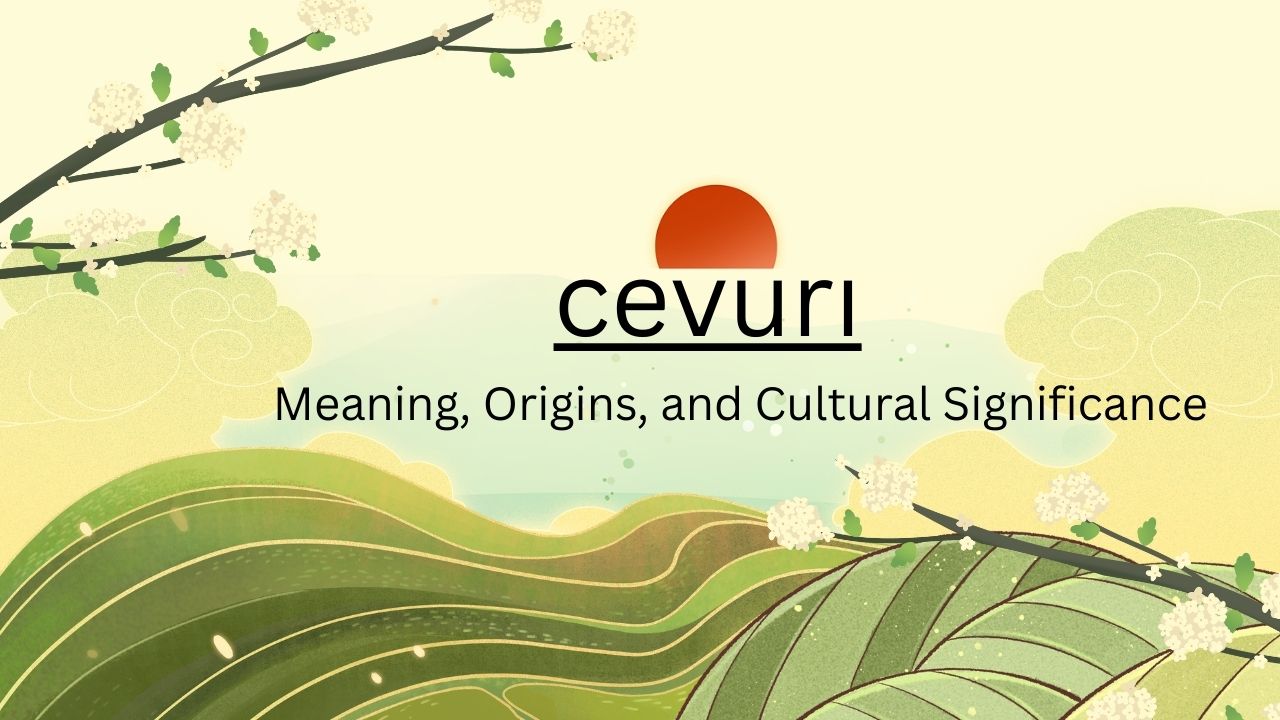
The term Cevurı comes from the Turkish word çeviri, which means “translation.” However, it is not just limited to language; it has broader meanings tied to transformation, interpretation, and cultural identity.
Historical Background
The root çeviri has long been used in Turkish to describe translation, conversion, or change from one form to another. Over time, “Cevurı” (with slight spelling variation) has evolved in newer cultural, artistic, and intellectual discourses—often representing the idea of carrying forward legacy while adapting to change.
Key Meanings and Interpretations
-
Translation / Interpretation: Converting meaning, language, or medium.
-
Cultural Adaptation: Describing how cultures, art, or ideas evolve—interpreting traditional forms in modern contexts.
-
Fluid Identity / Transformation: A metaphor for something dynamic, always in motion, and evolving.
Why Cevurı Is Gaining Attention
In an era of globalization, many people are searching for concepts that reflect both tradition and change. Cevurı provides a framework for understanding translation not only in language but also in culture, ideas, and identity. It has become a valuable concept for artists, writers, and thinkers who want to preserve heritage while engaging with modernity.
Practical Uses of the Concept
-
Literature and Arts: Re-interpreting myths, traditional stories, or folk elements in contemporary form.
-
Translation Studies: Considering not just word-for-word translation, but also how meaning, tone, and cultural context shift.
-
Cultural Studies and Identity: Helping diaspora communities maintain connections to their origins while adapting to new environments.
-
Education and Communication: Teaching cross-cultural dialogue and showing how ideas “translate” across boundaries.
Challenges and Criticisms
-
Ambiguity: Different people may interpret Cevurı in different ways, which can cause confusion.
-
Cultural Appropriation: Adaptation can sometimes misrepresent the original culture.
-
Resistance from Purists: Traditionalists may see reinterpretation as dilution of heritage.
Cevurı in the Modern Age
With digital media and globalization, cultural exchange is faster than ever. The concept of Cevurı has become especially relevant in shaping identity and heritage. Hybrid art forms—like fusion music or modern literature—embody the essence of Cevurı, blending the old with the new. In multicultural societies, it helps explain how languages, customs, and identities constantly shift.
How to Embrace Cevurı in Your Own Life or Work
-
Understand the origins of ideas, customs, or stories.
-
Balance preservation and innovation by keeping values intact while being open to reinterpretation.
-
Encourage cross-cultural understanding with respect and curiosity.
-
Use storytelling to show continuity and change.
Conclusion
Cevurı is more than just translation—it represents the ongoing process of preserving, interpreting, and evolving culture and identity. In today’s changing world, it provides a meaningful way to respect traditions while engaging with modern ideas. Whether in art, language, or everyday life, Cevurı offers a lens through which tradition and innovation can coexist.
About the Author