
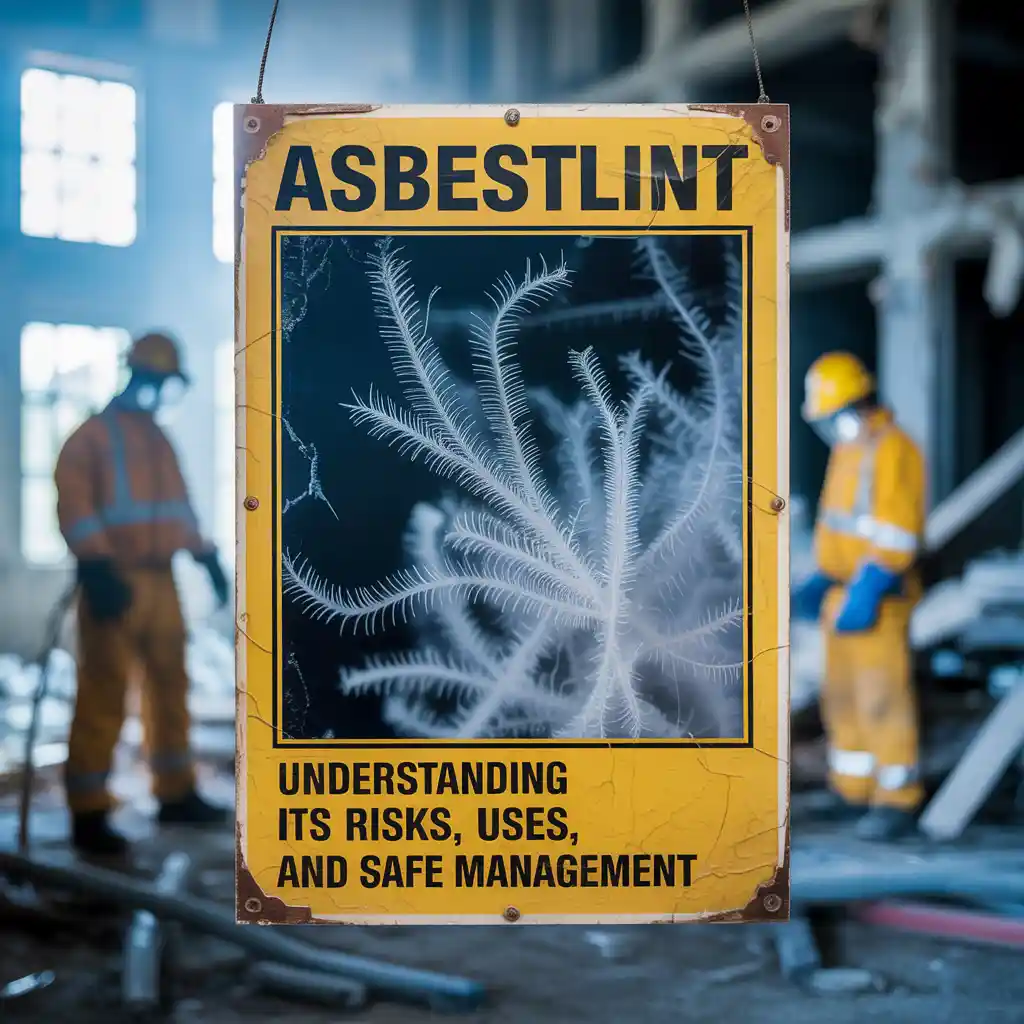
Asbestos has long held a complicated place in human industry and history. Once praised for its durability, heat resistance, and versatility, it is now infamous for its severe health risks. Among the many asbestos-containing materials (ACMs), asbestlint occupies a notable position. Although not always a familiar term to the general public, asbestlint has been widely used across industries and construction projects, becoming a significant focus in environmental safety and occupational health.
Understanding what asbestlint is, how it was applied, why it is dangerous, and how it should be managed today is crucial for workers, building owners, policymakers, and the public at large. This article explores asbestlint in detail, tracing its history, identifying its risks, and discussing strategies for safe handling and long-term management.
What is Asbestlint?
Asbestlint refers to a type of asbestos-containing material (ACM). It was manufactured and applied in industrial and construction settings during the 20th century, when asbestos was considered a “miracle material.” Asbestlint is typically composed of fibrous asbestos bound into industrial or building products.
Key characteristics include:
- Durability: Resistant to wear and tear, extending the lifespan of products.
- Fire Resistance: Non-flammable, making it attractive for insulation and safety applications.
- Thermal Insulation: Excellent at resisting heat transfer, commonly used in high-temperature environments.
- Chemical Resistance: Able to withstand exposure to many industrial chemicals.
Asbestlint could appear in various forms, from insulation materials to sealing components, making it difficult to identify without professional testing.
Historical Use of Asbestlint
During the mid-20th century, asbestos was integrated into thousands of products. Asbestlint, as a specific asbestos-based material, was widely deployed in:
- Construction: Used in ceilings, floors, roofing materials, and wall linings.
- Insulation: Applied around boilers, pipes, and furnaces due to its heat-resistant properties.
- Industrial Applications: Incorporated into machinery, gaskets, brake linings, and protective clothing.
- Shipbuilding: Applied in insulation and fireproofing on naval and commercial vessels.
- Public Buildings: Found in schools, hospitals, and government facilities.
The popularity of asbestlint stemmed from its practicality—few materials could match its affordability and versatility. Unfortunately, its dangers were underestimated or, in some cases, deliberately downplayed by manufacturers.
Health Risks Associated with Asbestlint
The hazards of asbestlint stem from its composition. Asbestos fibers are microscopic and can become airborne if the material is damaged, disturbed, or deteriorates over time. When inhaled or ingested, these fibers lodge in the body, causing long-term harm.
Health risks include:
- Asbestosis
A chronic lung condition caused by scarring of lung tissue. It leads to shortness of breath, persistent cough, and reduced lung capacity. - Mesothelioma
A rare and aggressive cancer affecting the lining of the lungs, abdomen, or heart. Almost exclusively linked to asbestos exposure, mesothelioma is often fatal. - Lung Cancer
Prolonged exposure to asbestos, particularly in smokers, dramatically increases the risk of lung cancer. - Pleural Disorders
Thickening of the pleura (lining of the lungs), pleural effusions (fluid buildup), and other abnormalities can result from asbestos exposure.
Importantly, these diseases often have long latency periods. Symptoms may not appear until decades after exposure, making early detection difficult.
Identifying Asbestlint
Because asbestos fibers are microscopic, identification requires specialized expertise. Common methods include:
- Visual Inspection: Conducted by trained professionals who can recognize likely ACMs.
- Sampling and Analysis: Laboratory testing using polarized light microscopy (PLM) or transmission electron microscopy (TEM).
- Risk Assessments: Evaluating the condition of suspected materials, as intact asbestlint may pose less immediate risk than deteriorating material.
It is essential not to disturb suspected asbestlint, as this can release harmful fibers into the air.
Legal and Regulatory Framework
Due to mounting evidence of health hazards, asbestos—including asbestlint—has been heavily regulated worldwide. Regulations vary by country but generally include:
- Bans or Restrictions: Many countries, such as those in the EU, Australia, and parts of Asia, have banned asbestos use entirely. Others, like the U.S., restrict but do not fully prohibit it.
- Workplace Safety Standards: Agencies like OSHA (Occupational Safety and Health Administration) and HSE (Health and Safety Executive) set exposure limits and guidelines.
- Abatement Protocols: Strict requirements govern the removal, transport, and disposal of asbestos materials.
- Building Regulations: Owners of older structures may be required to survey and manage asbestos-containing materials safely.
Understanding local regulations is vital for compliance and public safety.
Safe Management of Asbestlint
If asbestlint is discovered in a building or workplace, several management strategies are available:
- Encapsulation
Sealing the asbestos material with a protective coating that prevents fiber release. This is often a temporary solution. - Enclosure
Isolating the material by building barriers around it to prevent disturbance. - Removal
A permanent solution involving the safe extraction and disposal of asbestlint by licensed asbestos removal contractors. - Ongoing Monitoring
Regular inspections to check the condition of asbestos materials, ensuring they remain undisturbed.
Whichever method is chosen, handling asbestlint must be left to trained professionals equipped with protective gear and knowledge of proper disposal methods.
Asbestlint in the Modern Context
Even though asbestos has been restricted or banned in many regions, asbestlint remains present in countless older buildings and industrial sites. Its continued existence poses challenges:
- Renovation and Demolition: Disturbing old structures risks releasing asbestos fibers.
- Worker Safety: Construction, maintenance, and demolition workers are particularly vulnerable to exposure.
- Public Health: Schools, hospitals, and community centers built in the mid-20th century often still contain asbestos materials.
- Environmental Impact: Improper disposal can contaminate soil and water supplies.
As a result, safe management and awareness are as critical now as ever.
Case Studies
- Schools Built in the 1960s–70s
Many educational institutions incorporated asbestlint in walls, ceilings, and insulation. Modern remediation programs aim to safely manage or remove these materials while minimizing disruption. - Shipyards
Workers in shipbuilding industries were heavily exposed to asbestos-containing materials, including asbestlint insulation. The long-term health consequences are still seen in former workers today. - Residential Homes
In certain regions, asbestos-based products like asbestlint were used in home construction. Awareness campaigns now advise homeowners against DIY removal.
The Future of Asbestlint Management
Looking ahead, several developments shape the handling of asbestlint:
- Innovation in Alternatives: Safer materials, such as fiberglass and mineral wool, replace asbestos in modern construction.
- Stricter Regulations: More countries are moving toward complete bans on asbestos.
- Technological Advances: Improved detection methods, including AI-based image analysis, help identify asbestos faster.
- Public Awareness: Educational campaigns empower individuals to recognize potential risks and seek professional guidance.
- Health Research: Ongoing studies aim to improve early detection and treatment of asbestos-related diseases.
Conclusion
Asbestlint represents both a testament to industrial ingenuity and a sobering reminder of the unforeseen consequences of material use. Once valued for its resilience and versatility, it is now recognized as a dangerous asbestos-containing material that requires careful management.
Understanding asbestlint is critical for ensuring safety in older buildings, protecting workers, and preventing public exposure. While regulations and abatement practices have reduced risks, vigilance remains essential. Safe management—whether through encapsulation, removal, or ongoing monitoring—protects not just individuals but entire communities.
The legacy of asbestlint underscores a powerful lesson: innovation must always be balanced with responsibility. By learning from the past and managing existing risks wisely, society can protect health, preserve safety, and move toward a future free of asbestos-related dangers.
About the Author