Ark Augmented Reality
In recent years, augmented reality (AR) has emerged as one of the most transformative technologies, reshaping industries from gaming and retail to healthcare and education. Among the various applications of AR, Ark augmented reality stands out for its unique ability to merge immersive digital experiences with real-world contexts. By blending virtual content with physical environments, Ark augmented reality is redefining how we learn, work, and interact with technology.
Understanding Ark Augmented Reality
Ark augmented reality is more than just an AR platform—it is an ecosystem designed to enhance knowledge acquisition, problem-solving, and engagement. The term may refer to initiatives like Microsoft’s ArK (Augmented Reality with Knowledge Inference), which combines AR visualization with AI-powered knowledge management, or educational implementations such as those highlighted by awarenessideas.com. In both cases, the focus is on using AR to provide meaningful, context-aware interactions rather than simply overlaying graphics on the physical world.
Unlike traditional AR applications that primarily entertain or provide visual novelty, Ark augmented reality integrates intelligent content, offering learners and users interactive, real-time feedback. For instance, students studying anatomy can view 3D models of the human body overlaid on a classroom table, rotate organs, and see real-time simulations of biological processes. Professionals can use similar tools to visualize complex machinery or architectural plans in situ, reducing errors and enhancing understanding.
The Role of Immersive Learning
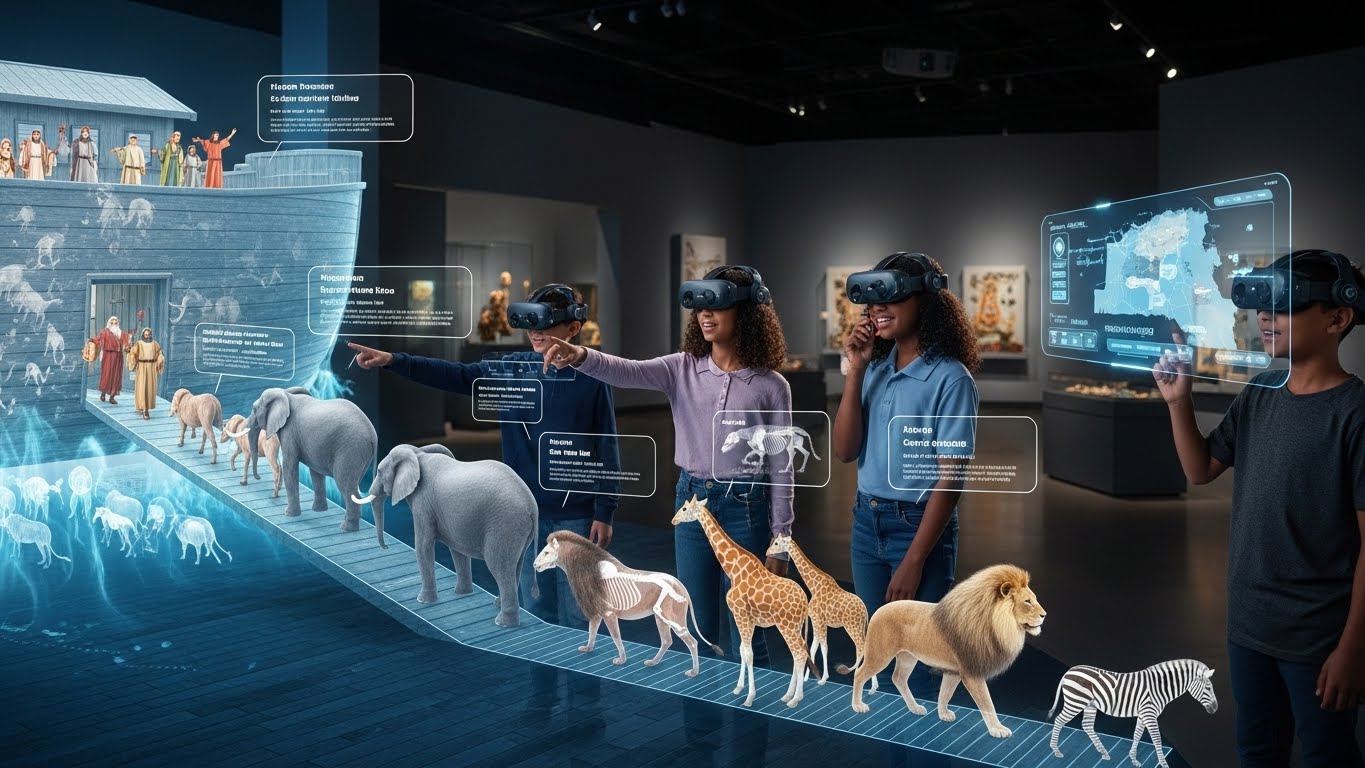
Education has always sought ways to make learning more engaging and effective. Ark augmented reality takes this to the next level through immersive learning, a teaching approach that places learners in an interactive, multisensory environment. Traditional methods often rely on textbooks or static diagrams, which can be abstract and difficult to relate to real-life scenarios. With AR, abstract concepts become tangible. Students can manipulate virtual objects, perform experiments, and see the immediate consequences of their actions in a controlled, risk-free environment.
Immersive learning powered by Ark augmented reality also promotes active participation. Studies have shown that learners retain information better when they engage multiple senses and interact directly with educational content. AR experiences encourage exploration, critical thinking, and problem-solving—skills that are essential in today’s knowledge-driven economy. From science labs and historical reconstructions to interactive language lessons, Ark augmented reality transforms classrooms into dynamic, hands-on learning hubs.
Technological Foundations
The effectiveness of Ark augmented reality stems from a combination of cutting-edge technologies. At its core, it relies on:
-
Computer Vision – Allows devices to detect and interpret physical environments, enabling virtual objects to seamlessly blend into the real world.
-
3D Modeling and Rendering – Creates realistic visualizations that can be interacted with in real time.
-
Artificial Intelligence – Powers knowledge inference, personalizing AR experiences based on user interactions and learning patterns.
-
Wearable AR Devices – Smart glasses, headsets, or mobile devices provide the interface through which users experience augmented reality.
Together, these technologies allow Ark augmented reality to move beyond static overlays. For example, in professional training, AI algorithms can assess user performance, offer personalized guidance, and dynamically adjust simulations to focus on areas needing improvement. This intelligent interactivity ensures that each experience is tailored and maximally effective.
Applications in Education
Ark augmented reality is particularly transformative in the educational sector. Schools, universities, and training institutes are increasingly adopting AR tools to enhance teaching outcomes. Some key applications include:
-
Science and Engineering: Students can visualize chemical reactions, biological systems, or mechanical processes in 3D, enhancing comprehension and retention.
-
History and Social Studies: AR can recreate historical events or ancient civilizations, allowing learners to explore immersive reconstructions rather than merely reading about them.
-
Language Learning: Interactive AR environments encourage conversational practice in virtual settings, making language acquisition more natural and engaging.
-
Special Education: AR offers customized experiences for learners with disabilities, making education more accessible and interactive.
These applications illustrate how Ark augmented reality can make learning both practical and enjoyable. By bridging the gap between theory and experience, AR empowers learners to understand complex concepts quickly and deeply.
Transforming Industries Beyond Education
While education is a major beneficiary, Ark augmented reality has implications for many other sectors.
-
Healthcare: Medical professionals can use AR to practice surgeries, simulate patient care, or visualize anatomy in 3D.
-
Architecture and Construction: Designers can overlay building plans onto real-world sites, allowing clients and teams to see structures before construction begins.
-
Retail: AR enhances shopping experiences by letting customers visualize products in their own spaces before purchase.
-
Corporate Training: Organizations can deliver immersive onboarding and skills training, reducing the time and cost associated with traditional methods.
The common thread is that Ark augmented reality creates interactive, context-aware experiences, helping users make better decisions, learn faster, and collaborate more effectively.
Challenges and Considerations
Despite its immense potential, Ark augmented reality faces several challenges.
-
Technical Limitations: High-quality AR experiences require robust hardware, precise sensors, and fast processing capabilities, which can be expensive.
-
Content Development: Creating meaningful AR content is resource-intensive and requires specialized skills.
-
User Adoption: Some users may be hesitant to adopt AR technology due to unfamiliarity, motion sickness, or skepticism about its benefits.
-
Privacy and Security: AR systems collect and process environmental and user data, raising potential privacy concerns.
Addressing these challenges requires continued innovation, standardization, and user education. Companies investing in Ark augmented reality must ensure experiences are accessible, secure, and truly beneficial to users.
The Future of Ark Augmented Reality
Looking ahead, Ark augmented reality is poised to become an integral part of both learning and professional environments. As hardware becomes more affordable and AI-driven AR systems become more sophisticated, immersive experiences will become increasingly seamless and widespread. Imagine a world where students can walk through virtual historical cities, engineers can collaborate on 3D prototypes in real time, and surgeons can practice complex procedures in risk-free AR simulations—all using Ark augmented reality.
Moreover, the integration of AR with other emerging technologies, such as virtual reality (VR), Internet of Things (IoT), and 5G connectivity, will enable even richer experiences. These combined technologies will allow for real-time collaboration across geographies, instant access to contextual data, and highly personalized learning paths.
Conclusion
Ark augmented reality represents a paradigm shift in how we approach learning, training, and technological interaction. By combining immersive AR experiences with intelligent knowledge inference, it transforms abstract concepts into tangible experiences, enhances engagement, and fosters deeper understanding. Its applications in education, healthcare, architecture, and industry demonstrate its versatility and potential.
While challenges remain, the continued evolution of Ark augmented reality promises a future where immersive learning and interactive technology are seamlessly integrated into our everyday lives. As we move further into a digital-first era, embracing tools like Ark augmented reality will not only enrich our knowledge but also empower us to experience the world in entirely new ways.
About the Author