
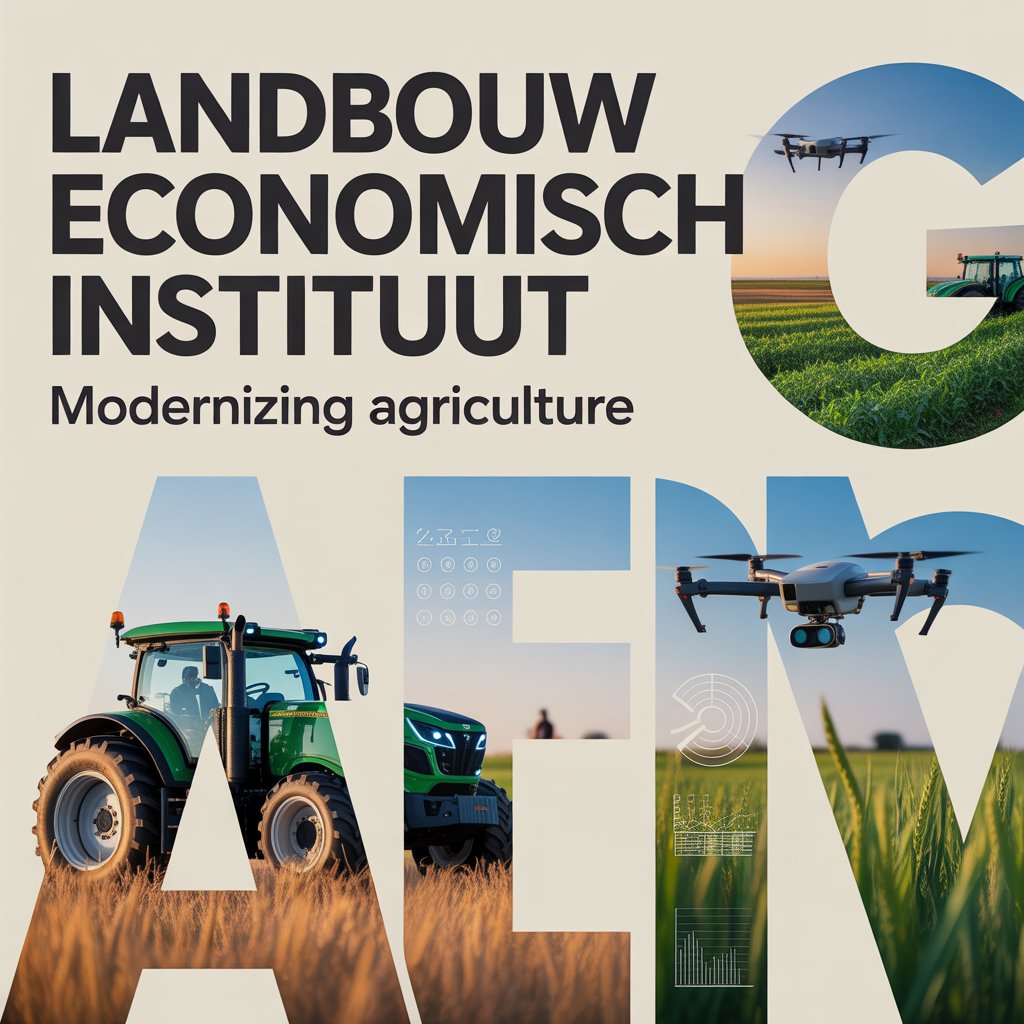
Landbouw Economisch Instituut
The Landbouw Economisch Instituut (LEI) stands as a cornerstone in the evolution of modern agriculture. As agriculture continues to face challenges from climate change, population growth, technological advancement, and global market pressures, the role of economic research and policy guidance becomes increasingly critical. The LEI has positioned itself at the intersection of agriculture, economics, and sustainability, providing insights that enable farmers, policymakers, and businesses to make informed decisions that enhance productivity, efficiency, and resilience.
The Role of LEI in Agricultural Research
Founded with the mission of applying economic analysis to agricultural practices, the LEI focuses on understanding the complex dynamics of the agricultural sector. Its work involves analyzing market trends, studying farm incomes, assessing productivity patterns, and evaluating the impact of governmental policies on agriculture. By producing evidence-based research, the LEI equips stakeholders with the tools needed to optimize resource allocation, improve profitability, and ensure the long-term sustainability of agricultural systems.
Economic research conducted by the LEI often covers diverse areas, such as crop pricing, livestock production economics, trade policies, and environmental regulations. This comprehensive approach allows the institute to provide holistic recommendations that consider not only the immediate financial benefits but also the long-term social and environmental impacts. In doing so, the LEI bridges the gap between theory and practice, ensuring that its research directly benefits the farming community.
Policy Guidance and Decision Support
One of the most significant contributions of the LEI is its role in shaping agricultural policies. Governments and regulatory bodies rely on LEI analyses to craft policies that balance economic growth with environmental stewardship. For instance, policy decisions regarding subsidies, trade agreements, and sustainability incentives are informed by the LEI’s rigorous studies. By highlighting both the potential benefits and unintended consequences of policy actions, the institute helps ensure that agricultural development remains economically viable and socially responsible.
Moreover, the LEI serves as a decision-support hub for farmers and agribusinesses. Its economic forecasts, risk assessments, and market analyses allow stakeholders to plan more effectively, manage uncertainties, and respond strategically to changing market conditions. Whether it is anticipating shifts in commodity prices or understanding the economic implications of new environmental regulations, the LEI provides actionable insights that empower the agricultural sector.
Driving Sustainability in Agriculture
Modern agriculture faces unprecedented challenges, particularly concerning sustainability and environmental impact. The LEI has recognized that long-term agricultural success is intertwined with ecological stewardship. As a result, the institute integrates sustainability analysis into its economic research, focusing on areas such as resource efficiency, soil health, water management, and greenhouse gas reduction.
By evaluating the economic viability of sustainable practices, the LEI encourages the adoption of environmentally friendly techniques that also make financial sense for farmers. For example, studies on precision farming, organic agriculture, and energy-efficient technologies help demonstrate how sustainable methods can enhance productivity while reducing costs and environmental harm. This dual focus on economics and sustainability positions the LEI as a thought leader in promoting responsible and modern agricultural practices.
Innovation and Technology Adoption
Innovation is at the heart of modern agriculture, and the LEI plays a pivotal role in supporting technological adoption. By analyzing cost-benefit scenarios and market potential, the institute guides farmers and agribusinesses in implementing new technologies such as automated machinery, digital monitoring systems, and data-driven decision-making tools. These innovations not only improve efficiency but also reduce labor intensity and minimize resource wastage.
Furthermore, the LEI actively studies emerging trends in agri-tech and evaluates their economic feasibility. By doing so, it ensures that technological innovations are not adopted blindly but are integrated thoughtfully into farming systems. This approach helps modernize agriculture without compromising financial stability or sustainability goals.
International Impact and Collaboration
The influence of the LEI extends beyond national borders. Agriculture is inherently global, with trade flows, market demands, and environmental challenges crossing borders. Recognizing this interconnectedness, the LEI engages in international research collaborations, providing comparative analyses of agricultural policies, trade impacts, and sustainability strategies across countries.
These collaborations enhance knowledge exchange and allow the LEI to benchmark national practices against global standards. As a result, the institute contributes to shaping a more resilient and competitive agricultural sector worldwide. Its work also helps policymakers understand how international market dynamics and environmental policies influence local agricultural economies, enabling better-informed decisions at both national and international levels.
Economic Resilience and Risk Management
Agriculture is subject to various risks, including price volatility, climate variability, and market disruptions. The LEI focuses on understanding and mitigating these risks through economic modeling and scenario analysis. By forecasting potential challenges and evaluating their economic impact, the institute provides farmers and policymakers with strategies to enhance resilience.
Risk management studies by the LEI cover insurance models, investment planning, diversification strategies, and adaptation measures to climate change. By quantifying risks and potential outcomes, the institute empowers stakeholders to make proactive decisions, reducing vulnerability and ensuring stable agricultural production even in uncertain conditions.
Education and Knowledge Dissemination
Beyond research and policy advice, the LEI plays a crucial role in education and knowledge dissemination. Through publications, workshops, and seminars, the institute shares its findings with farmers, agricultural organizations, and academic institutions. This dissemination ensures that the latest economic insights and technological recommendations reach the people who can implement them on the ground.
Moreover, the LEI encourages interdisciplinary learning by integrating economic, environmental, and technological perspectives. By doing so, it fosters a generation of agricultural professionals who understand the complex interplay between profitability, sustainability, and innovation. This educational mission complements the institute’s research goals, promoting a culture of continuous improvement and evidence-based decision-making in agriculture.
Challenges and the Road Ahead
While the LEI has made significant contributions to modernizing agriculture, it faces ongoing challenges. Rapid technological changes, global market fluctuations, and evolving environmental regulations require continuous adaptation. The institute must remain at the forefront of research, maintaining its relevance and providing timely insights to stakeholders.
Additionally, ensuring that economic recommendations are accessible and applicable to smallholder farmers remains a priority. Bridging the gap between high-level economic analysis and practical, on-farm implementation is critical for maximizing impact. The LEI’s ongoing commitment to collaboration, innovation, and sustainability will be essential in addressing these challenges and continuing its mission to modernize agriculture.
Conclusion
The Landbouw Economisch Instituut stands as a vital force in the modernization of agriculture. By combining economic research, policy guidance, sustainability analysis, and technological evaluation, the LEI provides comprehensive support to farmers, policymakers, and agribusinesses. Its work ensures that agricultural development is not only economically viable but also environmentally responsible and socially equitable.
As agriculture navigates the complexities of the 21st century, the LEI’s role becomes increasingly important. Through evidence-based insights, strategic guidance, and a focus on sustainability, the institute helps shape a resilient, productive, and modern agricultural sector. In doing so, the Landbouw Economisch Instituut exemplifies how research and economics can drive meaningful transformation in one of the world’s most essential industries.
About the Author